Building an MVP system for rapid product validation and launch

A structured approach to building MVPs for rapid validation, real user feedback, and long-term scalable growth.

Overview

Project codename: Atlas

The project name has been changed for confidentiality purposes. While the details of the implementation remain accurate, the codename is used to protect internal product information.

One of the biggest mistakes founders make is trying to build the entire product vision before validating whether users actually want it.

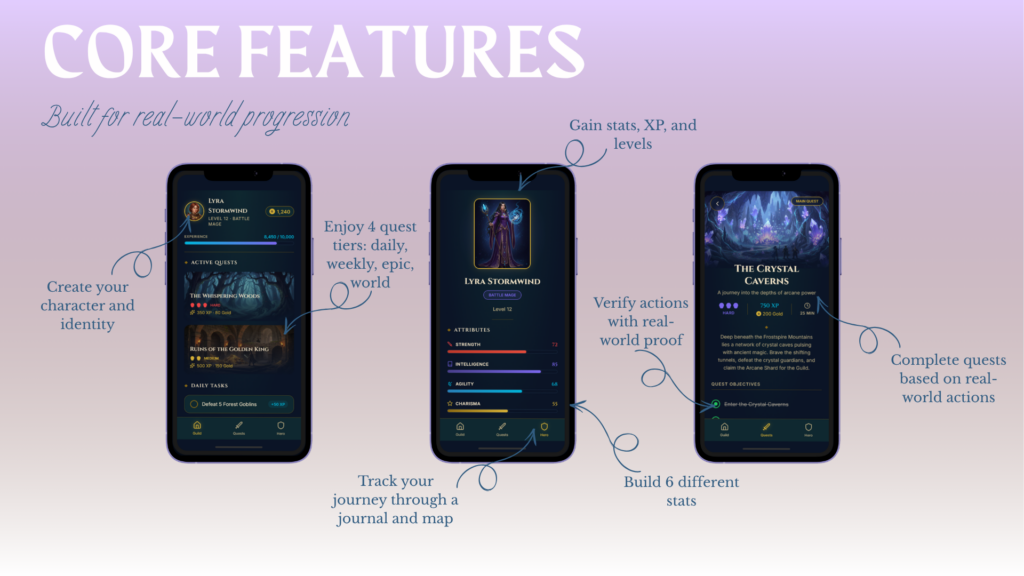
The team behind Project Atlas had a compelling concept: a digital platform centered around progression, engagement, and collaborative experiences. The vision included numerous features, systems, and future expansion opportunities. Like many ambitious products, the challenge was not a lack of ideas – it was deciding where to start.

Rather than attempting to build everything at once, the objective became clear: identify the smallest possible version of the product capable of delivering value, validating assumptions, and generating meaningful user feedback.

The Challenge

Early-stage products often face a common problem.

The vision is large, but resources, time, and certainty are limited.

In the initial planning stages, the product roadmap contained numerous ideas that could potentially improve the user experience. However, implementing every feature before launch would have significantly increased development time, complexity, and risk.

The biggest questions were:

  • Which features actually create value for users?
  • Which assumptions need validation?
  • What is the fastest path to market?
  • How can future expansion remain possible without overbuilding the first version?

The goal

was to create an MVP that would provide answers before larger investments were made.

Discovery Before Development

Before discussing technology, architecture, or implementation details, we focused on understanding the product itself.

This included:

  • Defining the core user problem
  • Identifying primary user motivations
  • Mapping key user journeys
  • Determining success criteria
  • Evaluating long-term product vision

Through this process, we were able to separate essential functionality from future enhancements.

Many planned features were valuable, but not necessary for validation.

By distinguishing between what users need today and what they may need later, we significantly reduced initial scope without compromising the product’s long-term vision.

Defining the MVP

A successful MVP is not simply a smaller product.

It is a focused product.

The objective was to identify the minimum set of features required to answer critical business and product questions.

Every proposed feature was evaluated against three criteria:

Does it support the core user experience?

Does it help validate a product assumption?

Does it contribute to measurable learning?

Features that did not meet these criteria were intentionally postponed.

This approach allowed the team to concentrate development efforts on the functionality most likely to generate actionable insights.

Designing for Growth from Day One

Although the MVP was intentionally lean, the underlying system architecture was designed with future growth in mind.

Many MVPs accumulate technical debt because scalability is ignored entirely during the early stages. While overengineering should be avoided, building without structure often creates expensive problems later.

To avoid this, the system was designed around:

Modular Architecture

Core systems were separated into logical components, allowing future functionality to be added without extensive rewrites.

Clear Product Boundaries

Features were organized around specific responsibilities and workflows, reducing unnecessary coupling between systems.

Expandable Data Structures

Data models were designed to support future product evolution while remaining simple enough for an MVP.

Iterative Development

The platform was structured to allow rapid improvements based on user feedback and product learning.

Key Deliverables

During the MVP planning phase, the following outputs were produced:

  • Product discovery workshops
  • User journey mapping
  • MVP scope definition
  • Feature prioritization framework
  • System architecture planning
  • UX structure and flow design
  • Development roadmap
  • Launch strategy recommendations

These deliverables provided alignment between product goals, business objectives, and technical implementation.

Outcome

The final result was a focused MVP strategy built around learning rather than assumptions.

Instead of investing heavily in a large feature set before launch, the product team gained a clear path toward validation.

Benefits included:

Reduced development complexity

Faster time-to-market

Lower upfront investment

Clear validation goals and Better prioritization decisions

Scalable technical foundations

Faster iteration cycles

Most importantly, the product could begin gathering real user feedback significantly earlier than originally planned.

Lessons Learned

One of the most valuable lessons from Project Atlas was that clarity creates momentum.

When teams attempt to solve every problem in version one, development slows, priorities become unclear, and validation is delayed.

By focusing on the smallest version capable of delivering value, the team created a stronger foundation for future growth while reducing risk during the earliest stage of the product lifecycle.

Final Thoughts

An MVP should not be viewed as a reduced version of the final product.

It should be viewed as a learning system.

The purpose of an MVP is to validate assumptions, uncover user behavior, and generate the insights required to build the right product—not simply more features.

For Project Atlas, this approach transformed a broad vision into a structured, achievable launch plan designed to support both immediate validation and long-term growth.

GET STARTED

BUILDING SOMETHING AMBITIOUS?

Let’s design and build a digital product system that is ready to scale.